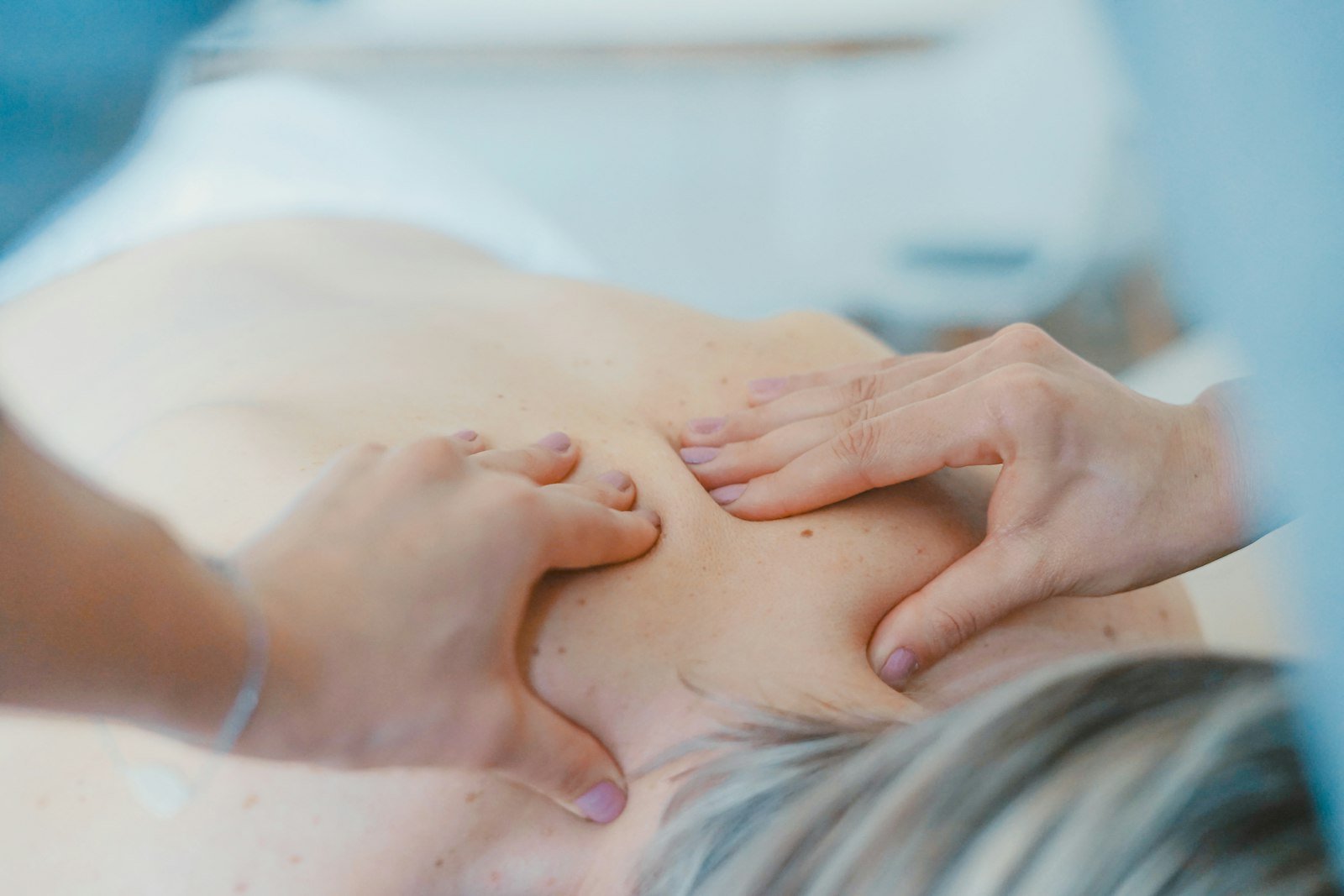
Most of us notice straight away when we are hungry or thirsty. Far fewer of us notice when we are hungry for touch. Yet after months of living alone, working long hours, moving to a new country or simply drifting apart from people, many clients tell me some version of the same thing at the end of a session: "I didn't realise how much I needed that."
Researchers have a name for that feeling: skin hunger, or touch starvation. And a growing body of research links it to loneliness, anxiety and low mood. Here is what the science says, what I see in my studio every week, and a few simple ways to bring more caring touch into your life.
What is skin hunger?
Touch is one of the first senses we develop, long before sight or speech. Kind, steady pressure on the skin is linked to the release of oxytocin, often called the bonding hormone, and to lower levels of stress hormones such as cortisol. In simple terms, touch is one of the ways the body tells itself it is safe.
When touch quietly disappears from daily life, the body loses one of its natural ways of settling down. People describe it in different ways:
- Feeling lonely even when your diary and your phone are full
- Carrying tension in the neck, shoulders and jaw that never quite lets go
- Restless sleep, or waking up already tired
- Craving a hug, then feeling awkward about wanting one
- A flat, low mood that is hard to explain
What the research says
During the pandemic, a study led by Professor Katerina Fotopoulou at UCL found that people who had less touch in their lives reported more anxiety and more loneliness. Dr Tiffany Field of the Touch Research Institute in Miami found something similar: people who felt touch-deprived were more likely to report depression, anxiety and poor sleep.
The strongest evidence so far came in 2024, when researchers from Ruhr University Bochum, the University of Duisburg-Essen and Amsterdam pulled together more than 130 studies involving around 10,000 people and published their review in Nature Human Behaviour. For adults, touch, much of it massage, reduced pain, depression and anxiety. Three findings stood out to me as a therapist:
- Human touch matters most for the mind. Weighted blankets and body pillows helped a little, but touch from a real person had a bigger effect on mental wellbeing.
- It doesn't have to come from someone you know. For adults, touch from a trained professional helped just as much as touch from a friend or partner.
- Regular beats long. Shorter, more frequent touch did more good than occasional long sessions. And crucially, the touch in these studies was wanted and agreed to.
Why this matters to so many of my clients
I see clients from all over the world. Some are expats and travellers far from family. Some live alone and can go weeks without a hug. Some are LGBTQ+ and grew up learning to keep their guard up. Some are plus-size and have felt judged so often that they avoid being touched at all. For trans and FTM clients, touch can feel complicated, and it deserves extra care and respect.
That is exactly why my studio works the way it does. Therapeutic touch is professional and non-sexual, and it is always on your terms:
- We talk first about how you are feeling and what you want from the session.
- You tell me any areas you would rather I avoid, and I respect that without question.
- You stay comfortably draped, and your name and pronouns are respected.
- You can ask for lighter or firmer pressure, or a pause, at any moment.
Over seven years I have watched shoulders drop and breathing slow as people realise they can simply relax and be looked after. For many, that feeling of safety is as valuable as the muscle work itself.
Simple ways to get more touch into your week
- Hug the people you trust, and ask first. A proper hug of a few seconds feels very different from a quick pat on the back.
- Spend time with animals. Stroking a dog or cat is calming for both of you.
- Try five minutes of self-massage before bed. Warm a little oil in your hands and work slowly over your neck, shoulders, hands and feet.
- Use a weighted blanket if you sleep alone. It is not a substitute for people, but research suggests it helps.
- Make massage a rhythm, not a rescue. Because regular touch seems to matter more than long sessions, a steady routine, such as an hour every few weeks, often does more than one long treat a year.
When to reach out for more support
Massage can help you feel calmer and more connected, but it is not a treatment for depression. If you have felt low, hopeless or numb for more than a couple of weeks, please speak to your GP or a counsellor. In Singapore, Samaritans of Singapore (SOS) is there 24 hours a day on 1767. Reaching out is a strength, not a weakness.
And if it has simply been too long since anyone looked after you, you are welcome here, whatever your body, gender, identity or background. Send me a message through Check Availability with a time that suits you, and we will find a slot. The warm oil is on me.
Further reading: this article was inspired by The power of touch can ease depression and anxiety by Emma Young, BPS Research Digest. The thoughts and tips above are my own.
Main photo: Toa Heftiba on Unsplash